Podrán ser ciertas las palabras de la ministra; pero puede dar lugar a malinterpretaciones o es que hay algo que esconder?
Un saludo a todo el mundo.
Mision FAS: Afganistán
Moderadores: Mod. 4, Mod. 5, Mod. 3, Mod. 2, Mod. 1
-
Navarro

- Jefe de Operaciones

- Mensajes: 2541
- Registrado: 19 Nov 2007 15:11
- Ubicación: En la Navarra foral y española
Re: Mision FAS: Afganistán
El sabio no dice lo que sabe y el necio no sabe lo que dice.
No puede morir esclavo quien ha combatido largo tiempo por la libertad.
E=extorsionadores T=terroristas A=asesinos.
No puede morir esclavo quien ha combatido largo tiempo por la libertad.
E=extorsionadores T=terroristas A=asesinos.


Re: Mision FAS: Afganistán
Quizás para que no les cuenten a los periodistas en los off the record entre ellos y los soldados cosas como esta:
En España, con las autoridades politico-militares del minisdef nuestras acciones de guerra contra guerrilla pasan de una forma semiclandestina, y por supuesto, sin que la opinión publica se entere. Mientras otros contingentes acogen a periodistas "empotrados" en sus unidades, España niega la presencia de estos a la principal base del oeste del país alegando razones de seguridad. Va a ser más fácil para un periodista español llegar a Bala Murghab empotrado en una unidad USA que en una española. Vergüenza le debería dar a Carme, su dircomdef, los sicarios del dircomdef, y a todos los demás.News from New York State Division of Military & Naval Affairs
For more information contact: Lt. Col. Paul Fanning: cell: 0798010642, e-mail:paul.a.fanning@afghan.swa.army.mil
Rockland County Soldier Earns Valor Medal for Afghan Combat Actions
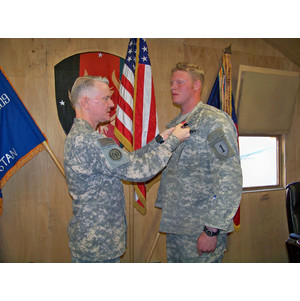
CAMP PHOENIX, KABUL , AFGHANISTAN (12/16/2008; 1037)(readMedia)-- Army Specialist Salvatore Galgano, age 23 from Pomona, NY was awarded the Bronze Star Medal with Valor Device today for exceptionally meritorious service while under fire.
On 20 August, Spec. Galgano was a member of a combat patrol of about 20 U.S. troops in Bala Murghab, Badghis Province in western Afghanistan. The patrol came under fire from entrenched enemy forces surrounding a corn field, which forced the patrol to take cover in ditches and behind rock walls adjacent to a small farming village. The estimated strength of the enemy force was approximately 70 fighters.
Specialist Galgano moved to the site of enemy contact and then rushed to a position on top of hill in order to establish a base of fire with his M240B machinegun and provide cover for the other members of his team.
According to the combat report, Spec. Galgano repeatedly exposed himself to heavy fire, delivered effective suppressive fire against enemy positions and served as a forward observer as other members of his team used grenade launchers as artillery to engage the enemy who were occupying covered positions in close proximity to the patrol. From his over watch position, he drew considerable small arms, sniper, machinegun and rocket propelled grenade fire. More than 50 rounds landed within inches of him. He occupied this position for nearly three hours.
Later, when he had evacuated his position under concealment from smoke grenades, he joined in the ground assault and clearing operation which swept most of the enemy from their positions.
The engagement lasted almost 6 hours, with most of the fighting taking place at close quarters. Specialist Galgano once again took an exposed position on top of the roof of a building in the village in order to engage the enemy
Specialist Galgano is also credited with taking out several enemy fighters who were attempting to attack the patrol's flank and for eliminating an RPG gunner who was targeting a team mate. At the end of the battle, approximately 30 enemy fighters had been killed or wounded.
Specialist Galgano joined the Army 3 years ago as an infantry soldier and is assigned to the 11th Armored Cavalry Regiment based at Fort Irwin, CA. He was deployed to Afghanistan about a year ago and assigned to Afghan Regional Security Integration Command-West (ARSIC-W) as one of a 44-member training team to support the Afghan National Army. His rotation to Afghanistan is concluding and he will soon be coming home to the U.S.
ARSIC-W is a command of Combined Joint Task Force Phoenix, a part of Combined Security Transition command-Afghanistan with the mission to train, mentor and develop the Afghan National Army and Afghan National Police.
At the time of the incident Combined Joint Task Force Phoenix was being led by the 27th Infantry Brigade Combat Team of the New York Army National Guard.
Cutline:
Col. Brian K. Balfe, a member of the New York Army National Guard and commander of CJTF-Phoenix pins Spec. Salvatore Galgano with the Bronze Star Medal with Valor Device at Camp Phoenix, in Kabul on 13 December 2008.
U.S. Army Photo by Major Kathy Oliver, 27th Brigade Combat Team
La curiosidad mató al gato.
-
KS
Re: Mision FAS: Afganistán
Estupenda aportación, gato.
Olé los huevos del soldado especialista Salvatore Galgano, menudo héroe.
KS
Olé los huevos del soldado especialista Salvatore Galgano, menudo héroe.
KS

Re: Mision FAS: Afganistán
En Declaraciones de Prensa, el comandante supremo de la fuerzas de la OTAN en Europa, el general estadounidense John Craddock, reitera que El Conflicto Afgano no se ganara por la Fuerza Militar. Fuente YAHOO
Bruselas, 18 dic (EFE).- El conflicto en Afganistán, que entró en 2008 en su séptimo año, "no se ganará por la fuerza militar", según ha afirmado hoy el comandante supremo de la fuerzas de la OTAN en Europa, el general estadounidense John Craddock.
En una conversación con un grupo de periodistas, el máximo responsable de las fuerzas aliadas en Afganistán ha considerado "clave" seguir manteniendo en aquel país un "enfoque global" que combine el esfuerzo militar con el civil.
"El conflicto de Afganistán no se ganará por la fuerza militar. Los militares establecemos las condiciones de seguridad para que los otros elementos, políticos, diplomáticos, económicos y sociales, actúen y puedan aportar buen gobierno, reconstrucción, desarrollo, empleo y oportunidades para el pueblo afgano".
Se trata de "una tarea compartida, global, militar y civil", ha insistido Craddock, quien ha añadido que las tropas internacionales permanecerán "hasta que las fuerzas afganas puedan liderar las operaciones, mantener el territorio y tomar el relevo" de la ISAF, (Fuerza internacional para la asistencia a la seguridad en Afganistán).
En su opinión, ese momento podría llegar "alrededor de 2012", a condición de que se mantenga el actual ritmo de reclutamiento, entrenamiento y equipamiento tanto del ejército como de la policía afganos.
El general ha confirmado que en los últimos meses se ha registrado un aumento de la actividad y los combates, sobre todo en el este y sur del país, por varias razones.
Primero, porque "hay más tropas en más áreas" y, segundo, por la capacidad de los insurgentes taliban para ir y venir desde sus "santuarios" al otro lado de la frontera paquistaní.
No obstante, ha asegurado que "está mejorando la coordinación" en las zonas fronterizas entre las fuerzas afganas, las paquistaníes y la ISAF.
Se ha abierto un primer centro fronterizo de coordinación que permite a los tres ejércitos compartir información sobre los movimientos insurgentes. En el futuro, ha anunciado Craddock, habrá seis de esos centros, tres en el lado paquistaní y tres en el afgano.
El comandante supremo de la OTAN para Europa (SACEUR) ha reiterado que todavía hay "lagunas y agujeros importantes" por cubrir en la lista de requerimientos para la ISAF.
Ha insistido especialmente en la necesidad de helicópteros, "claves en un escenario como ése", medios de reconocimiento, equipos médicos y tropas en "un par de provincias".
Según el general, italianos y españoles han mostrado recientemente "cierta flexibilidad" en relación con sus aportaciones, aunque no ha dado detalles.
Craddock no ha querido en ningún momento cuantificar el número de soldados que todavía faltan, y se ha limitado a señalar algunas capacidades deficitarias, funciones o áreas geográficas donde a su juicio la ISAF tiene que reforzar su presencia.
Respecto a la posibilidad de una transferencia de medios y experiencias militares de Irak a Afganistán, si se produce la retirada paulatina estadounidense del país árabe, el comandante de la OTAN ha recomendado cautela.
"Se ha aprendido mucho en Irak, pero tenemos que tener mucho cuidado a la hora de trasladar esas lecciones a Afganistán. La situación del país, las condiciones, las circunstancias políticas son muy diferentes".
"La ISAF y los mandos regionales tienen que examinar cuidadosamente si la experiencia es transferible".
Para Craddock, la clave en Afganistán seguirá siendo " mantener un enfoque global, lo que significa combinar el esfuerzo militar con el civil.
"Los militares podemos limpiar las áreas, no hay ningún problema en ello, pero debemos mantener una presencia segura, ya sea de las fuerzas afganas o de la ISAF, con el fin de que pueda producirse después el trabajo de reconstrucción y desarrollo".
Y para ello, para "limpiar, conservar y construir", la OTAN necesita disponer de "un nivel suficiente de fuerzas".
Saludos.
Bruselas, 18 dic (EFE).- El conflicto en Afganistán, que entró en 2008 en su séptimo año, "no se ganará por la fuerza militar", según ha afirmado hoy el comandante supremo de la fuerzas de la OTAN en Europa, el general estadounidense John Craddock.
En una conversación con un grupo de periodistas, el máximo responsable de las fuerzas aliadas en Afganistán ha considerado "clave" seguir manteniendo en aquel país un "enfoque global" que combine el esfuerzo militar con el civil.
"El conflicto de Afganistán no se ganará por la fuerza militar. Los militares establecemos las condiciones de seguridad para que los otros elementos, políticos, diplomáticos, económicos y sociales, actúen y puedan aportar buen gobierno, reconstrucción, desarrollo, empleo y oportunidades para el pueblo afgano".
Se trata de "una tarea compartida, global, militar y civil", ha insistido Craddock, quien ha añadido que las tropas internacionales permanecerán "hasta que las fuerzas afganas puedan liderar las operaciones, mantener el territorio y tomar el relevo" de la ISAF, (Fuerza internacional para la asistencia a la seguridad en Afganistán).
En su opinión, ese momento podría llegar "alrededor de 2012", a condición de que se mantenga el actual ritmo de reclutamiento, entrenamiento y equipamiento tanto del ejército como de la policía afganos.
El general ha confirmado que en los últimos meses se ha registrado un aumento de la actividad y los combates, sobre todo en el este y sur del país, por varias razones.
Primero, porque "hay más tropas en más áreas" y, segundo, por la capacidad de los insurgentes taliban para ir y venir desde sus "santuarios" al otro lado de la frontera paquistaní.
No obstante, ha asegurado que "está mejorando la coordinación" en las zonas fronterizas entre las fuerzas afganas, las paquistaníes y la ISAF.
Se ha abierto un primer centro fronterizo de coordinación que permite a los tres ejércitos compartir información sobre los movimientos insurgentes. En el futuro, ha anunciado Craddock, habrá seis de esos centros, tres en el lado paquistaní y tres en el afgano.
El comandante supremo de la OTAN para Europa (SACEUR) ha reiterado que todavía hay "lagunas y agujeros importantes" por cubrir en la lista de requerimientos para la ISAF.
Ha insistido especialmente en la necesidad de helicópteros, "claves en un escenario como ése", medios de reconocimiento, equipos médicos y tropas en "un par de provincias".
Según el general, italianos y españoles han mostrado recientemente "cierta flexibilidad" en relación con sus aportaciones, aunque no ha dado detalles.
Craddock no ha querido en ningún momento cuantificar el número de soldados que todavía faltan, y se ha limitado a señalar algunas capacidades deficitarias, funciones o áreas geográficas donde a su juicio la ISAF tiene que reforzar su presencia.
Respecto a la posibilidad de una transferencia de medios y experiencias militares de Irak a Afganistán, si se produce la retirada paulatina estadounidense del país árabe, el comandante de la OTAN ha recomendado cautela.
"Se ha aprendido mucho en Irak, pero tenemos que tener mucho cuidado a la hora de trasladar esas lecciones a Afganistán. La situación del país, las condiciones, las circunstancias políticas son muy diferentes".
"La ISAF y los mandos regionales tienen que examinar cuidadosamente si la experiencia es transferible".
Para Craddock, la clave en Afganistán seguirá siendo " mantener un enfoque global, lo que significa combinar el esfuerzo militar con el civil.
"Los militares podemos limpiar las áreas, no hay ningún problema en ello, pero debemos mantener una presencia segura, ya sea de las fuerzas afganas o de la ISAF, con el fin de que pueda producirse después el trabajo de reconstrucción y desarrollo".
Y para ello, para "limpiar, conservar y construir", la OTAN necesita disponer de "un nivel suficiente de fuerzas".
Saludos.
LOS OJOS SE FIAN DE ELLOS MISMOS, LAS OREJAS DE LOS DEMAS
Re: Mision FAS: Afganistán
Probablemente, el militar más político de la OTAN sea precisamente el SACEUR, que tiene que lidiar con tanto tipo raro...entre ellos los representantes del Ministerio de Defensa español, que, o no van a las reuniones, o van para cagarla. Todavía resuena el inaudito toque de atención del portavoz OTAN a la Chacón cuando ésta acusó a la OTAN poco menos de bombardeos salvajes...aunque quien sabe si los que dirigían esos bombardeos eran españoles
http://newsvote.bbc.co.uk/mpapps/pageto ... 9.stm?ad=1
Gates Speech on Afghanistan, MRAPs
Kandahar Town Hall (Afghanistan)
As Delivered by Secretary of Defense Robert M. Gates, Kandahar, Afghanistan, Thursday, December 11, 2008
Thank you all for coming today � though I know from a little experience in the military and a lot of experience in government that some of you may have been �volunteered� for this additional duty. I hope you have not had to wait around too long.
When this visit was first planned a few weeks ago, it was supposed to be part of a farewell tour � my last chance as secretary of defense to give a final goodbye and thanks to our awesome men and women serving in the theater. Well, as you may have heard, there�s been a slight change of plans. I now have a better appreciation of what it�s like to be stop-lossed.
There were many important reasons to accept President-elect Obama�s request to stay on as secretary of defense: the crucial next phase we are entering here in Afghanistan and also in Iraq; the tough choices the Pentagon needs to make about its budget and priorities; and many more.
But no reason was more compelling to me than the fact that if hundreds of thousands of young Americans are doing their duty � you doing your duty � without fail often under difficult and dangerous conditions � then I really had no choice but to follow suit, even if it means failing retirement from government service for the second, and hopefully final, time.
On the subject of leaders, I should tell you that I have with me today a figure familiar to some of you, Lieutenant General David Rodriguez, my senior military assistant. General Rod, as we call him, was the commander of Combined Joint Task Force-82 and RC East until April of this year. And as we take the critical next steps in Afghanistan, I am fortunate to have someone with his experience and expertise at my side. It tells you something about Dave�s sense of duty, humility, and patience that he was willing to go from the glorious perch of commanding the 82nd Airborne Division to a job whose duties sometimes include note taker and meeting monitor.
Before opening the floor for questions, I wanted to make a few comments about why I am here and what I�d like to take away from our discussion.
First, I wanted to be able to look you in the eye and say thank you � on my own behalf, on behalf of our current and next commanders-in-chief, and on behalf of the American people. Each one of you could have done something easier, safer, and probably better paid, but you chose to step forward to wear this country�s uniform. You chose to volunteer � and in some cases re-volunteer � knowing full well that a deployment to a combat theater was the most likely result.
Every one of you probably knows of someone lost in this war, whether from your unit or from a previous rotation. Each death hurts beyond measure. Carrying that sorrow, you have gone forward � not only for the sake of a just and good cause but for the sake of the people fighting to the left and to the right of you.
These past two years, I have come to work every day with the conviction that the first, second, and third priority of the secretary of defense � and the department he leads � is to do everything possible to get troops what they need to succeed and to protect themselves on the battlefield. That has been my conviction from day one.
And so, form virtually a standing start, over the last 18 months we have built and sent to the theater some 12,000 MRAPs. Several thousand more are on the way. On an urgent basis, we are sending all possible MRAPs to Afghanistan. And we are working equally urgently to select and build an all-terrain MRAP vehicle designed specifically for Afghanistan. As many of you know, we are vastly expanding the intelligence, surveillance, and reconnaissance capabilities you need. I promise you we will do whatever else it takes to give you the tools it takes to complete your mission and come home safely.
We are entering the holiday season. It�s a particularly difficult time to be separated from your friends and families. Your people back home embody the sustaining power of love and loyalty. They endure � not joyfully, but willingly � bound together by their shared experience, by sacrifice, and by the pride they rightly feel in you. Your fellow Americans are proud of you, thinking of you, and praying for the success of your mission and for your safety.
The size and scope of that mission are going to see some changes in the coming months, though the details are still being worked out. And the final decisions will be made by the next President. But a consensus has emerged that more troops are needed to provide security and train Afghan security forces. I don�t need to tell any of you that success in this campaign � in a country with ethnic fissures, grinding poverty, and daunting terrain � will not come easily or quickly. A former Afghan cabinet minister called Afghanistan �the theme park of problems.� General Petraeus has said this would be �the longest campaign of the long war.�
Nor will success come through military means alone. There will also need to be a substantial plus-up in areas such as infrastructure, reconstruction, economic development, and governance. Our civilian agencies, our NATO allies and partners, plus international organizations and NGOs, will all have to step up, do more, and coordinate better as we help the Afghan people defend themselves against violent extremists. For the Afghans, this is, after all, their country, their fight, and their future.
But I believe we can succeed, we must succeed, and we will succeed. The attack that killed nearly 3,000 innocent people on our soil was planned and organized in this country. And those who would perpetrate a similar, if not worse, atrocity, are plotting and operating on the border with Pakistan as we speak. I have total confidence that the men and women of the American military � with the Afghan people and our partners from around the world � will, over time, finish the job that was begun seven years ago. But even now our men and women in uniform come home to the honor and gratitude you so richly deserve.
One of the highlights of this job has been meeting with small groups of service men and women � from junior enlisted to company and field grade officers, from active duty to guard and reserves � without their chain of command present. Hearing their questions, concerns, and aspirations � unvarnished and uncensored � has been bracing. And it�s been helpful.
Your suggestions have shaped my thinking on everything from day-to-day military operations to enhancing the quality of life for service members and their families.
This gathering is larger, but I hope it won�t keep you from being direct and honest with your questions and concerns. And don�t worry about the reporters here � they are good people.
So at this point, I would say thank you for your time and attention, I look forward to your questions, and then I�d like to shake hands with each of you, get an individual photograph, and give you a coin.
© 2008 Inside Washington Publishers
Reproduction or redistribution forbidden without express permission of the publishers
http://defensenewsstand.com
--------------------------------------------------------------------------------
US 'to boost Afghanistan force'
US Defence Secretary Robert Gates has ordered the deployment of an additional combat aviation brigade to Afghanistan early next year, officials have said.
The decision to send about 2,800 soldiers, equipped with both attack and transport helicopters, comes as part of an effort to counter the insurgency. Three or four combat brigades are to follow in late spring or early summer.
The top US and Nato commander in Afghanistan, Gen David McKiernan, has requested at least 20,000 extra troops.
There are currently 31,000 US troops in the country, 14,000 of whom are part of the 51,000-strong Nato-led International Security Assistance Force (Isaf).
'Long fight'
The US army combat aviation brigade, which includes Apache attack helicopters as well as Black Hawk and Chinook aircraft, is expected to move from the US in early spring.
It is considered a support force and does not fill the need for the four combat brigades requested by Gen McKiernan, officials say. During a visit to Kandahar last week, Mr Gates said the US military's primary goal was to build up the Afghan security forces so they become capable of operating more independently, but warned that this might take several years.
"This is a long fight, and I think we're in it until we are successful along with the Afghan people," he said. "I do believe there will be a requirement for sustained commitment here for some protracted period of time. How many years that is, and how many troops that is I think nobody knows at this point."
But in an interview on Wednesday, Mr Gates said that he the US "should think long and hard" before sending significantly more than the 20,000 additional troops requested by Gen McKiernan so they do not become to be seen as an occupying force.
http://newsvote.bbc.co.uk/mpapps/pageto ... 9.stm?ad=1
La curiosidad mató al gato.


Re: Mision FAS: Afganistán
"Nuestro" "desastre" del 27-N en Badghis, analizado ni más ni menos que por el NYTIMES. Es el peor descalabro de nuestros aliados afganos -y digo nuestro por ser nuestra zona de responsabilidad- a manos de un lider insurgente que había sido puesto en libertad poco antes por las autoridades. Me sorprende la poca repercusión que ha tenido esta noticia en España: algún blog, y muy de refilón -en general estos muchachos buscan la información poco y mal- , y algún otro medio. En otros países habría caido alguna comisión de investigación para ver cómo puede pasar esto en la zona donde nuestros aliados confían en nosotros. Eso si, el SACEUR valora la "flexibilidad" que ha mostrado recientemente España...será por haber cedido Gormach a los noruegos...
http://www.nytimes.com/2008/12/21/world ... nted=printDecember 21, 2008
Ambush Raises Unsettling Questions in Afghanistan
By KIRK SEMPLE
KABUL, Afghanistan — It was one of the most humiliating attacks the Afghan security forces had ever suffered. On Nov. 27, Taliban insurgents ambushed a supply convoy in the northwest province of Badghis, killing nine Afghan soldiers and five police officers, wounding 27 men, capturing 20 others, destroying at least 19 vehicles and stealing five, Afghan officials said.
The Afghan authorities quickly learned that the man suspected of having orchestrated the attack, Maulavi Ghulam Dastagir, had only weeks before been in police custody on charges of aiding the Taliban.
Mr. Dastagir had been personally released by President Hamid Karzai after assurances from a delegation of tribal elders that he would live a peaceful life, officials said this month.
The ambush, and the presidential pardon that allowed the insurgent to go free, have become the subject of a governmental inquest and the source of profound embarrassment for the Afghan government.
The case has also underscored the vulnerabilities of the Afghan security forces as the Taliban have multiplied their presence around the country and, in only the past few years, have gained strength in regions that were once relatively peaceful, like the northwest. Developing the Afghan security forces is a cornerstone of the American-led effort to defeat the insurgents.
“This is an important subject for everybody because we haven’t had these sorts of casualties before,” said Gen. Zaher Azimi, the spokesman for the Ministry of Defense.
Mr. Karzai has publicly said little, if anything, about the case. His spokesman, Humayun Hamidzada, acknowledged in an interview last week that the president had released Mr. Dastagir from detention in September after a meeting with a delegation of tribal elders and politicians from Badghis who appealed for his freedom.
From time to time, Mr. Karzai issues pardons for detainees, though these orders often happen without publicity. In traditional Afghan society, problems are often resolved through quiet discussions among tribal elders and other community leaders.
“They thought he was a good person and not an enemy of the state,” Mr. Hamidzada said. “Based on their advice, he decided to release him.”
“Many people are taken into custody illegally and are lumped with the Taliban and others,” he added. “They’re not all Taliban, they’re not all terrorists.”
The spokesman said it was not yet certain whether Mr. Dastagir had led the ambush, though General Azimi, the Defense Ministry spokesman, said the evidence indicated that he “played the main role.”
Reached by telephone late Saturday, Mr. Dastagir laughed when asked whether he had been involved in the ambush. “Definitely!” he exclaimed, and laughed again. “I am a jihadist, I will continue my jihad,” he declared. “My morale is very high.”
The Taliban insurgency, which is based in Afghanistan’s southern and southeastern provinces, along the border with Pakistan, has steadily expanded to other parts of the country, particularly in the west and northwest.
In the past three years, the size of the Taliban presence in Badghis, a mountainous and sparsely populated province on the border with Turkmenistan, has multiplied from almost nothing to a force that numbers in the high hundreds, if not more, and that has cowed local officials and has come to dominate large areas of territory, provincial officials said.
This growth, residents and local officials say, has been relatively unchecked by Afghan and international security forces.
The insurgency has also become increasingly tenacious in the neighboring provinces of Herat and Faryab. In the telephone interview on Saturday, Mr. Dastagir, who said he was speaking from Badghis, vowed to solidify the Taliban’s foothold in those provinces and press the insurgency’s campaign farther. “We will infiltrate the other provinces in the north,” he said.
Several officials said Mr. Karzai’s release of Mr. Dastagir was a major setback in the struggle to roll back the Taliban presence in Badghis.
“The Afghan and foreign security forces don’t have a strategy for security in Badghis,” said Qari Dawlat Khan, the leader of the provincial council.
The autopsy of the ambush also revealed flaws in military planning and intelligence gathering, including fundamental problems in the command of the unit that been attacked, the Afghan National Army’s 207th Corps, Afghan officials said.
Before the Badghis ambush, the unit had suffered significant losses in several insurgent attacks in the past two years in Badghis and the western provinces of Farah and Herat, and the performance of the unit’s commander was under review, officials said.
The convoy’s mission was to carry supplies for the police from Qala-i-Nau, the provincial capital, to Balamorghab, a Taliban stronghold about 70 miles away along poor roads, officials said.
On Nov. 26, about 200 Afghan soldiers and police officers set out from Qala-i-Nau, spent the night in the village of Mangan, near the border, then resumed driving early the next morning.
As the road passed through a gorge near Balamorghab, insurgents hiding on the bluffs above opened fire with small arms and rocket-propelled grenades, officials said. The initial volleys blew up an oil tank-truck that was positioned toward the head of the convoy, blocking the road and dividing the forward vehicles in the convoy from the others.
The ensuing battle lasted several hours, ending only after four helicopters, two from the Afghan Army and two from the international forces, arrived with Afghan commandos to help repel the insurgents.
General Azimi, the Defense Ministry spokesman, said the attack was “totally unexpected,” in part because the commanders had taken the tribal elders at their word and believed that the local Taliban fighters would not initiate any attacks after the release of Mr. Dastagir.
Since the attack, the government’s top security officials have been called to testify before Parliament twice. Muhammad Eqbal Safi, a member of Parliament and the chairman of the lower house’s defense committee, said the officials’ explanations about the security forces’ lack of readiness “did not convince us.”
A high-level official in the Afghan intelligence service, the National Directorate of Security, informed Parliament last week that intelligence officials had warned military and police officials of a possible Taliban ambush in late-November, Mr. Safi said.
Mohammad Yaqub, a lawmaker from Badghis, who was not in the delegation that visited Mr. Karzai, said it was commonly believed that there were several hundred, and possibly thousands, of Taliban fighters in the province. The convoy, he said, “was like handing food to the enemy.”
Rangeen Mushkwani, a senator from Badghis who attended the elders’ meeting with Mr. Karzai, said the Taliban ordered the delegation to plead for Mr. Dastagir’s release. “These people did not come by their own choice,” Mr. Mushkwani said. “They were forced to come.”
Mr. Mushkwani said that he attended the meeting only to protect his relatives in Badghis. “Because my relatives, my cousins, my family members are living under the authority of the Taliban, I couldn’t say that I wasn’t going,” he said.
According to Mr. Hamidzada, Mr. Karzai’s spokesman, the president has requested the names of the delegation’s members. If the investigation determines that Mr. Dastagir was responsible for the ambush, he said, the government would hold the elders responsible.
“Karzai took a political gamble and released him,” Mr. Yaqub, the lawmaker from Badghis, said of Mr. Dastagir. The president, he added, was “deceived.”
Abdul Waheed Wafa and Taimoor Shah contributed reporting.
Re: Mision FAS: Afganistán
Los Talibanes emiten comunicado, tras conocer el anuncio de envio de nuevos efectivos por parte de EEUU. YAHOO
Los talibanes prometen a EEUU una derrota como la soviética en Afganistán
Por Nasrat Shoaib
Los talibanes prometieron este domingo a EEUU una derrota tan aplastante en Afganistán como la propinada a los soviéticos en los años 80, al día siguiente del anuncio estadounidense de que enviará hasta 30.000 soldados más a ese país antes del próximo verano.
"Cada día (los estadounidenses) cambian su discurso para disimular su derrota. Ahora quieren enviar a Afganistán la misma cantidad de tropas que los soviéticos en los años 80", estimó Yusuf Ahmadi, contactado por teléfono desde Kandahar (sur de Afganistán).
El jefe del Estado Nayor de las Fuerzas Armadas estadounidenses, el almirante Michael Mullen, anunció el sábado en Kabul que su país enviará entre 20.000 y 30.000 militares a Afganistán antes del verano boreal de 2009. "Los soviéticos habían enviado la misma cantidad de soldados para ocupar Afganistán, pero sufrieron una fuerte derrota. Y cuando los estadounidenses aumenten la cantidad de tropas a ese nivel, sufrirán también una aplastante derrota", añadió.
En diciembre de 1979, la Unión Soviética invadió Afganistán, país que abandonó 15 años después sin haber logrado vencer la resistencia de los muyaidines (combatientes) afganos, pese a un importante despliegue militar. El sábado, el jefe del estado mayor interarmas estadounidense, el almirante Michael Mullen, anunció que Estados Unidos enviará entre 20.000 y 30.000 soldados más a Afganistán antes del verano boreal próximo.
El envío de esas tropas suplementarias está destinado a contrarrestar una insurrección que cada día gana más terreno. Con ese incremento, se duplicaría el contingente estadounidense presente en la actualidad en Afganistán, donde Estados Unidos cuenta con entre 30.000 y 35.000 efectivos.
Sumados a los 35.000 soldados de otros países desplegados en el marco de la Fuerza Internacional para Asistencia a la Seguridad (ISAF) dependiente de la Organización del Tratado del Atlántico norte (OTAN), las tropas extranjeras en Afganistán están cerca de los 100.000 efectivos.
Esa cifra sería comparable a la de los soldados soviéticos desplegados en el mismo terreno en los años 80 (entre 100.000 y 160.000, según las épocas y las estimaciones). La masiva ocupación del territorio afgano no fue suficiente para que los soviéticos controlaran el país, que finalmente abandonaron 10 años después, destacaba el domingo el portavoz talibán.
Al ser más numerosos, los estadounidenses "serán objetivos más fáciles", amenazó Ahmadi, al estimar que la "extraña" decisión de Estados Unidos de enviar refuerzos muestra las tácticas dilatorias de Estados Unidos frente a una lucha que se le escapa de las manos.
"La OTAN y las fuerzas de la coalición que han venido a ocupar Afganistán tendrán serios problemas" y "duras derrotas", según el portavoz talibán. "La situación, el clima y la geografía de Afganistán" son los factores en los que se basan los talibanes para confiar en derrotar a las tropas extranjeras.
En los últimos dos años se incrementó la violencia de los insurgentes afganos, entre éstos los talibanes, expulsados del poder en Kabul en noviembre de 2001 por una coalición liderada por Estados Unidos. En Afganistán están desplegados 70.000 soldados extranjeros, la mitad de ellos estadounidenses.
En cambio, las autoridades afganas recibieron con satisfacción el anuncio estadounidense. El portavoz de la cancillería afgana, Sultan Ahmad Baheen, dio la "bienvenida" al aumento de tropas, aunque pidió que las tropas sean desplegadas "en los lugares donde se necesita" como la provincia sureña de Helmand o a lo largo de la frontera oriental.
El anuncio estadounidense ser produjo un mes antes de la investidura del presidente electo Barack Obama, que se comprometió a retirar las tropas norteamericanas de Irak y llevar una parte a Afganistán, al que, junto con Pakistán, considera "frente central" de la guerra contra el terrorismo.
Estados Unidos suministra además a Afganistán una importante ayuda financiera. Un tercio de los 15.000 millones de dólares de ayuda al desarrollo que recibió Afganistán desde la expulsión del poder de los talibanes, a fines de 2001, proviene de Washington.
El aumento de tropas en Afganistán no doblegó a la rebelión afgana, liderada por los talibanes y otros grupos armados, algunos vinculados a Al Qaeda. El año 2008 fue el peor para las fuerzas internacionales en Afganistán pues murieron 287 soldados extranjeros, 1.000 policías y militares afganos y más de 2.000 civiles
Saludos
Los talibanes prometen a EEUU una derrota como la soviética en Afganistán
Por Nasrat Shoaib
Los talibanes prometieron este domingo a EEUU una derrota tan aplastante en Afganistán como la propinada a los soviéticos en los años 80, al día siguiente del anuncio estadounidense de que enviará hasta 30.000 soldados más a ese país antes del próximo verano.
"Cada día (los estadounidenses) cambian su discurso para disimular su derrota. Ahora quieren enviar a Afganistán la misma cantidad de tropas que los soviéticos en los años 80", estimó Yusuf Ahmadi, contactado por teléfono desde Kandahar (sur de Afganistán).
El jefe del Estado Nayor de las Fuerzas Armadas estadounidenses, el almirante Michael Mullen, anunció el sábado en Kabul que su país enviará entre 20.000 y 30.000 militares a Afganistán antes del verano boreal de 2009. "Los soviéticos habían enviado la misma cantidad de soldados para ocupar Afganistán, pero sufrieron una fuerte derrota. Y cuando los estadounidenses aumenten la cantidad de tropas a ese nivel, sufrirán también una aplastante derrota", añadió.
En diciembre de 1979, la Unión Soviética invadió Afganistán, país que abandonó 15 años después sin haber logrado vencer la resistencia de los muyaidines (combatientes) afganos, pese a un importante despliegue militar. El sábado, el jefe del estado mayor interarmas estadounidense, el almirante Michael Mullen, anunció que Estados Unidos enviará entre 20.000 y 30.000 soldados más a Afganistán antes del verano boreal próximo.
El envío de esas tropas suplementarias está destinado a contrarrestar una insurrección que cada día gana más terreno. Con ese incremento, se duplicaría el contingente estadounidense presente en la actualidad en Afganistán, donde Estados Unidos cuenta con entre 30.000 y 35.000 efectivos.
Sumados a los 35.000 soldados de otros países desplegados en el marco de la Fuerza Internacional para Asistencia a la Seguridad (ISAF) dependiente de la Organización del Tratado del Atlántico norte (OTAN), las tropas extranjeras en Afganistán están cerca de los 100.000 efectivos.
Esa cifra sería comparable a la de los soldados soviéticos desplegados en el mismo terreno en los años 80 (entre 100.000 y 160.000, según las épocas y las estimaciones). La masiva ocupación del territorio afgano no fue suficiente para que los soviéticos controlaran el país, que finalmente abandonaron 10 años después, destacaba el domingo el portavoz talibán.
Al ser más numerosos, los estadounidenses "serán objetivos más fáciles", amenazó Ahmadi, al estimar que la "extraña" decisión de Estados Unidos de enviar refuerzos muestra las tácticas dilatorias de Estados Unidos frente a una lucha que se le escapa de las manos.
"La OTAN y las fuerzas de la coalición que han venido a ocupar Afganistán tendrán serios problemas" y "duras derrotas", según el portavoz talibán. "La situación, el clima y la geografía de Afganistán" son los factores en los que se basan los talibanes para confiar en derrotar a las tropas extranjeras.
En los últimos dos años se incrementó la violencia de los insurgentes afganos, entre éstos los talibanes, expulsados del poder en Kabul en noviembre de 2001 por una coalición liderada por Estados Unidos. En Afganistán están desplegados 70.000 soldados extranjeros, la mitad de ellos estadounidenses.
En cambio, las autoridades afganas recibieron con satisfacción el anuncio estadounidense. El portavoz de la cancillería afgana, Sultan Ahmad Baheen, dio la "bienvenida" al aumento de tropas, aunque pidió que las tropas sean desplegadas "en los lugares donde se necesita" como la provincia sureña de Helmand o a lo largo de la frontera oriental.
El anuncio estadounidense ser produjo un mes antes de la investidura del presidente electo Barack Obama, que se comprometió a retirar las tropas norteamericanas de Irak y llevar una parte a Afganistán, al que, junto con Pakistán, considera "frente central" de la guerra contra el terrorismo.
Estados Unidos suministra además a Afganistán una importante ayuda financiera. Un tercio de los 15.000 millones de dólares de ayuda al desarrollo que recibió Afganistán desde la expulsión del poder de los talibanes, a fines de 2001, proviene de Washington.
El aumento de tropas en Afganistán no doblegó a la rebelión afgana, liderada por los talibanes y otros grupos armados, algunos vinculados a Al Qaeda. El año 2008 fue el peor para las fuerzas internacionales en Afganistán pues murieron 287 soldados extranjeros, 1.000 policías y militares afganos y más de 2.000 civiles
Saludos
LOS OJOS SE FIAN DE ELLOS MISMOS, LAS OREJAS DE LOS DEMAS
Re: Mision FAS: Afganistán
Por si pueda interesar, dejo este reportaje periodistico publicado en DAILYMUSLIMS, que muestra otra vision de la situacion en Afganistan.
THE Taliban now holds a permanent presence of 72 per cent of Afghanistan according to the latest report by an influential think tank.
But within hours of the International Council on Security and Development (ICOS) releasing this news various politicians and ambassadors from Afghanistan, America and Britain criticised its contents.
The reality is none of these people really know what is happening on the ground in Afghanistan because it is not safe to travel and if any of them do venture out it is rarely beyond the confines of Kabul.
The reason I know the ICOS report carries weight is because I have just returned from Afghanistan myself and, unlike most politicians, diplomats and journalists who go to the country, I went in unescorted.
The Taliban is forming an ever tightening noose around Kabul with, as ICOS says, three out of four main highways into the capital city now compromised by Taliban.
How do I know? Because I drove around Afghanistan with film-maker Hassan al Banna Ghani and saw the evidence with my own eyes - we nearly got our heads blown off for our troubles as well, having inadvertently driven into a firefight between Taliban fighters and Afghan police 30 minutes from Kabul on the main road to Ghazni.
We drove up from Peshawar, through the dramatic and historic Khyber Pass, down into Torkham and from there we had a straight run via Jalalabad to Kabul.
It’s an amazing drive, possibly one of the most scenic routes in the world but it wasn’t the backdrop of the Hindu Kush or the fertile green valleys cloaked in a gossamer-like morning mist peaking out from rows of jagged mountain peaks ahead which took my breath away on this occasion.
It was the fresh roadside carnage which punctuated the drive to the Afghan capital. We must have seen the skeletons of nearly 20 oil tankers targetted by rocket propelled grenade launchers in the hands of the Taliban.
These are images British Prime Minister Gordon Brown, US President elect Barack Obama or Hamid Karzai are unlikely to see for themselves because the only safe way to get to Kabul is to fly in to the airport.
We didn’t have the luxury of choice, so our decision to drive this treacherous route was based on the fact we couldn’t hang around Islamabad for another we before getting a seat on a flight.
But I am glad we did because it gave us a chance to see for ourselves what is happening on the ground in Afghanistan. it gave us an opportunity to talk to ordinary people who have to live day in and day out without the luxury of a heavily armed military escort, or a heavily fortified place to work and an even more heavily guarded place to sleep.
For the next week we travelled by road, by car, unescorted in to areas and provinces that other foreigners dare not go and as I said earlier, we nearly paid a heavy price for our amazing footage.
And thanks to that experience, I can read the ICOS report coming from a point of knowledge that the Western leaders and all of their advisers simply do not have.
That is why it would be foolish to dismiss ICOS claims that the Taliban now holds a permanent presence in 72% of Afghanistan, up from 54% a year ago. They have advanced from their southern heartlands, where they are now the de facto governing power in a number of towns and villages, to Afghanistan’s western and north-western provinces, as well as provinces north of Kabul.
Norine MacDonald QC, President and Lead Field Researcher of ICOS told a London press conference: “The Taliban are now controlling the political and military dynamic in Afghanistan.
“Despite increasingly dire levels of security in Afghanistan in recent months, there has been surprisingly little change in response from the international community. The insurgency continues to turn NATO’s weaknesses into its own strengths,” she added.
“The Taliban are closing a noose around Kabul, and there is a real danger that the Taliban will simply overrun Afghanistan under the noses of NATO,” said Paul Burton, Director of Policy for ICOS.
The British Ambassador to Afghanistan Sir Sherard Cowper-Coles commented on the report on the BBC Radio 4 Today Programme on Monday morning in a dismissive fashion, saying: “I'm afraid the methodology in the report is seriously flawed. I mean for example its map of Kabul, which I have in front of me, shows the area where I'm sitting talking to you from now, across which I drove this morning to see President Karzai, as being under heavy Taliban influence.
“It's quite the reverse: Afghans are strolling in the streets, celebrating the Eid. It counts as one incident in the province the size of Yorkshire, meaning that that province is under permanent Taliban control. It's a very thin peace of work”.
The arrogance and ignorance of Sir Sherard is nothing short of breath-taking. No foreigner dare venture out for a stroll in Kabul unescorted because of kidnap fears. And I’d like to bet he went under heavily armed escorts to do his interview.
I have seen the British Embassy in Kabul - it is hidden behinds vast mounds of concrete bunkers, barbed wire and a heavily armed guard presence. You can’t just stroll in to the embassy there like I did in March 2003.
I know nothing about Sir Sherard, but I’d like to bet he doesn’t go for a stroll anywhere in Kabul, but I do know Norine MacDonald, author of the report. She is one gutsy lady who comes from a point of knowledge because she does get out on the ground - Kabul and beyond.
Furthermore I’ve seen her sit on her hunkers and talk with Afghan men - and women - about their hopes, needs and fears in some of the most dangerous areas of Afghanistan.
Also speaking on the Today programme was Afghan MP Shukria Barakzai who when asked about the report said: “I'm surprised. This is not the truth. If Taliban's that much powerful so where's these Coalition forces and Afghan Government themselves? I don't think the Taliban will be that much powerful although there is a lack of security, this is the truth.
“The Taliban is still a threat for security and somehow the Coalition forces, also in some places they are threat for security, particularly for civilians, but I completely disagree with such figures which has been made.”
I’ve also had the pleasure of meeting Shukria, an amazing woman from an extremely wealthy and privileged background - being rich is not a crime but I can tell you that Shukria will not have stepped outside of Kabul unless by air.
She is a bright, intelligent woman and I was delighted when she became an MP because she has a good heart and a deep love for her country.
I am really fearful about plans to vastly increase the US and British presence in Afghanistan. I can tell you the Taliban are rubbing their hands with glee at the thought of what they regard as a “bigger army, bigger target and more shiny new weapons to take from the toy soldiers”.
The American presence is loathed in Afghanistan even among those who don’t want to see the Taliban back in power. This is down to many things not least of all their arrogance, refusal to acknowledge or even try and understand the culture and their habit of shooting at any motorist who tries to overtake their slow-moving convoys.
Think about it - when you have an open road ahead why should you have to sit behind a bunch of armoured personnel vehicles doing less than 20mph.
And try talking to an Afghan motorist who sits patiently in a traffic jam only to have his car scrunched and shunted to the side by a US convoy which has decided to create its own traffic free lane. he will tell you exactly what he thinks about the behavior of Uncle Sam’s boys.
Then there’s the endless list of US missile strikes on wedding parties which have slaughtered innocent Afghans - very rarely are these murders followed up by an apology but they continue to happen.
Norine also called for a free and open media - that would be nice but there is also documented evidence that anyone writing against the US occupation can expect a visit from the Americans. I spoke to one young such journalist who ended up being kidnapped, beaten and thrown in a cell in Bagram for 18 hours after revealing out of date US army rations were being sold on the black market in Kabul.
Guess what, the story is true as I found out trolling through the goods on sale at an open air market in Kabul. There indeed were US army rations on sale - and we have Hassan’s film to prove it.
The western leaders can either choose to remain in denial and send in more troops while listening to pompous civil servants, politicians and diplomats who say only what they think their masters want to hear, or they can sit down and read the ICOS report and act upon it.
There are solutions to the Afghan crisis and removing the arrogant, ignorant US military is one way - and take out the Brits too because Afghans can no longer distinguish between the two.
Bombard the people with genuine aid and not artillery shells and give the Afghan Government real support instead of aid with conditions attached.
Genuine job creation schemes offering decent money is a good start. And while it might be nice to have career women emerging from the rubble of Kabul, start with the men first. Give them their dignity back by providing real jobs.
Given the choice between starvation or fighting for the Taliban for around $40 dollars a month, I know what decision I would make. Think about it - it’s a no brainer.
* Yvonne Ridley and Hassan al Banna Ghani’s documentary: In Search of Prisoner 650 will be broadcast on Press TV in early 2009
Saludos
THE Taliban now holds a permanent presence of 72 per cent of Afghanistan according to the latest report by an influential think tank.
But within hours of the International Council on Security and Development (ICOS) releasing this news various politicians and ambassadors from Afghanistan, America and Britain criticised its contents.
The reality is none of these people really know what is happening on the ground in Afghanistan because it is not safe to travel and if any of them do venture out it is rarely beyond the confines of Kabul.
The reason I know the ICOS report carries weight is because I have just returned from Afghanistan myself and, unlike most politicians, diplomats and journalists who go to the country, I went in unescorted.
The Taliban is forming an ever tightening noose around Kabul with, as ICOS says, three out of four main highways into the capital city now compromised by Taliban.
How do I know? Because I drove around Afghanistan with film-maker Hassan al Banna Ghani and saw the evidence with my own eyes - we nearly got our heads blown off for our troubles as well, having inadvertently driven into a firefight between Taliban fighters and Afghan police 30 minutes from Kabul on the main road to Ghazni.
We drove up from Peshawar, through the dramatic and historic Khyber Pass, down into Torkham and from there we had a straight run via Jalalabad to Kabul.
It’s an amazing drive, possibly one of the most scenic routes in the world but it wasn’t the backdrop of the Hindu Kush or the fertile green valleys cloaked in a gossamer-like morning mist peaking out from rows of jagged mountain peaks ahead which took my breath away on this occasion.
It was the fresh roadside carnage which punctuated the drive to the Afghan capital. We must have seen the skeletons of nearly 20 oil tankers targetted by rocket propelled grenade launchers in the hands of the Taliban.
These are images British Prime Minister Gordon Brown, US President elect Barack Obama or Hamid Karzai are unlikely to see for themselves because the only safe way to get to Kabul is to fly in to the airport.
We didn’t have the luxury of choice, so our decision to drive this treacherous route was based on the fact we couldn’t hang around Islamabad for another we before getting a seat on a flight.
But I am glad we did because it gave us a chance to see for ourselves what is happening on the ground in Afghanistan. it gave us an opportunity to talk to ordinary people who have to live day in and day out without the luxury of a heavily armed military escort, or a heavily fortified place to work and an even more heavily guarded place to sleep.
For the next week we travelled by road, by car, unescorted in to areas and provinces that other foreigners dare not go and as I said earlier, we nearly paid a heavy price for our amazing footage.
And thanks to that experience, I can read the ICOS report coming from a point of knowledge that the Western leaders and all of their advisers simply do not have.
That is why it would be foolish to dismiss ICOS claims that the Taliban now holds a permanent presence in 72% of Afghanistan, up from 54% a year ago. They have advanced from their southern heartlands, where they are now the de facto governing power in a number of towns and villages, to Afghanistan’s western and north-western provinces, as well as provinces north of Kabul.
Norine MacDonald QC, President and Lead Field Researcher of ICOS told a London press conference: “The Taliban are now controlling the political and military dynamic in Afghanistan.
“Despite increasingly dire levels of security in Afghanistan in recent months, there has been surprisingly little change in response from the international community. The insurgency continues to turn NATO’s weaknesses into its own strengths,” she added.
“The Taliban are closing a noose around Kabul, and there is a real danger that the Taliban will simply overrun Afghanistan under the noses of NATO,” said Paul Burton, Director of Policy for ICOS.
The British Ambassador to Afghanistan Sir Sherard Cowper-Coles commented on the report on the BBC Radio 4 Today Programme on Monday morning in a dismissive fashion, saying: “I'm afraid the methodology in the report is seriously flawed. I mean for example its map of Kabul, which I have in front of me, shows the area where I'm sitting talking to you from now, across which I drove this morning to see President Karzai, as being under heavy Taliban influence.
“It's quite the reverse: Afghans are strolling in the streets, celebrating the Eid. It counts as one incident in the province the size of Yorkshire, meaning that that province is under permanent Taliban control. It's a very thin peace of work”.
The arrogance and ignorance of Sir Sherard is nothing short of breath-taking. No foreigner dare venture out for a stroll in Kabul unescorted because of kidnap fears. And I’d like to bet he went under heavily armed escorts to do his interview.
I have seen the British Embassy in Kabul - it is hidden behinds vast mounds of concrete bunkers, barbed wire and a heavily armed guard presence. You can’t just stroll in to the embassy there like I did in March 2003.
I know nothing about Sir Sherard, but I’d like to bet he doesn’t go for a stroll anywhere in Kabul, but I do know Norine MacDonald, author of the report. She is one gutsy lady who comes from a point of knowledge because she does get out on the ground - Kabul and beyond.
Furthermore I’ve seen her sit on her hunkers and talk with Afghan men - and women - about their hopes, needs and fears in some of the most dangerous areas of Afghanistan.
Also speaking on the Today programme was Afghan MP Shukria Barakzai who when asked about the report said: “I'm surprised. This is not the truth. If Taliban's that much powerful so where's these Coalition forces and Afghan Government themselves? I don't think the Taliban will be that much powerful although there is a lack of security, this is the truth.
“The Taliban is still a threat for security and somehow the Coalition forces, also in some places they are threat for security, particularly for civilians, but I completely disagree with such figures which has been made.”
I’ve also had the pleasure of meeting Shukria, an amazing woman from an extremely wealthy and privileged background - being rich is not a crime but I can tell you that Shukria will not have stepped outside of Kabul unless by air.
She is a bright, intelligent woman and I was delighted when she became an MP because she has a good heart and a deep love for her country.
I am really fearful about plans to vastly increase the US and British presence in Afghanistan. I can tell you the Taliban are rubbing their hands with glee at the thought of what they regard as a “bigger army, bigger target and more shiny new weapons to take from the toy soldiers”.
The American presence is loathed in Afghanistan even among those who don’t want to see the Taliban back in power. This is down to many things not least of all their arrogance, refusal to acknowledge or even try and understand the culture and their habit of shooting at any motorist who tries to overtake their slow-moving convoys.
Think about it - when you have an open road ahead why should you have to sit behind a bunch of armoured personnel vehicles doing less than 20mph.
And try talking to an Afghan motorist who sits patiently in a traffic jam only to have his car scrunched and shunted to the side by a US convoy which has decided to create its own traffic free lane. he will tell you exactly what he thinks about the behavior of Uncle Sam’s boys.
Then there’s the endless list of US missile strikes on wedding parties which have slaughtered innocent Afghans - very rarely are these murders followed up by an apology but they continue to happen.
Norine also called for a free and open media - that would be nice but there is also documented evidence that anyone writing against the US occupation can expect a visit from the Americans. I spoke to one young such journalist who ended up being kidnapped, beaten and thrown in a cell in Bagram for 18 hours after revealing out of date US army rations were being sold on the black market in Kabul.
Guess what, the story is true as I found out trolling through the goods on sale at an open air market in Kabul. There indeed were US army rations on sale - and we have Hassan’s film to prove it.
The western leaders can either choose to remain in denial and send in more troops while listening to pompous civil servants, politicians and diplomats who say only what they think their masters want to hear, or they can sit down and read the ICOS report and act upon it.
There are solutions to the Afghan crisis and removing the arrogant, ignorant US military is one way - and take out the Brits too because Afghans can no longer distinguish between the two.
Bombard the people with genuine aid and not artillery shells and give the Afghan Government real support instead of aid with conditions attached.
Genuine job creation schemes offering decent money is a good start. And while it might be nice to have career women emerging from the rubble of Kabul, start with the men first. Give them their dignity back by providing real jobs.
Given the choice between starvation or fighting for the Taliban for around $40 dollars a month, I know what decision I would make. Think about it - it’s a no brainer.
* Yvonne Ridley and Hassan al Banna Ghani’s documentary: In Search of Prisoner 650 will be broadcast on Press TV in early 2009
Saludos
LOS OJOS SE FIAN DE ELLOS MISMOS, LAS OREJAS DE LOS DEMAS

Re: Mision FAS: Afganistán
Palabras del JEMAD respecto a las operaciones antidroga en nuestra provincia.
–¿Hay un planteamiento fijo sobre qué hacer con el opio, uno de los principales problemas allí? `
–Lo que está establecido es que es responsabilidad de la policía afgana. Dentro del plan de operaciones en vigor, nuestra contribución se concreta en prestar apoyo mediante acciones en inteligencia, en mando y control… pero no entra como un objetivo militar.
Inteligencia, mando y control, y puntos suspensivos. Sin embargo que aclare que la lucha contra las drogas no es un objetivo militar (gravísimo error) parece descartar que la QRF sea nuestra, puede que incluso sea del PEF/PEP del INLA
–¿Hay un planteamiento fijo sobre qué hacer con el opio, uno de los principales problemas allí? `
–Lo que está establecido es que es responsabilidad de la policía afgana. Dentro del plan de operaciones en vigor, nuestra contribución se concreta en prestar apoyo mediante acciones en inteligencia, en mando y control… pero no entra como un objetivo militar.
Inteligencia, mando y control, y puntos suspensivos. Sin embargo que aclare que la lucha contra las drogas no es un objetivo militar (gravísimo error) parece descartar que la QRF sea nuestra, puede que incluso sea del PEF/PEP del INLA
Cry havoc and unleash the hawgs of war - Otatsiihtaissiiststakio piksi makamo ta psswia
Re: Mision FAS: Afganistán
Ese pdf es un buen documento para guardar. En cuanto a la lucha contra los campos de amapolas, hay diferentes sensibilidades dentro de los paises que forman ISAF.
Saludos.
Saludos.